 Nederlands
 English
 Great Britain
 Deutsch
 Français
 Svenska
- Home
- Inspiration
- How do you illuminate a tree in the garden? Tips and inspiration
How do you illuminate a tree in the garden? Tips and inspiration
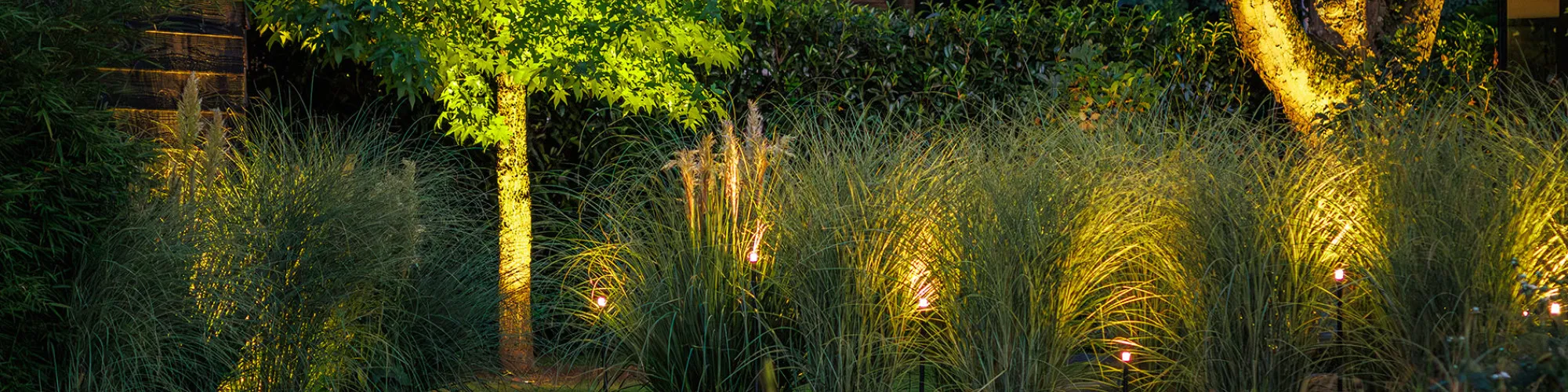
Trees are often prominent features in the garden during the day. They provide height, shade, and structure. But once it gets dark, they fade into the background. By illuminating a tree, it remains visible in the evening as well. It also adds depth and character to your outdoor space. Tree lighting not only creates atmosphere, but also helps with orientation in the garden. In this blog, we’ll tell you more about it.
Summary
Illuminating a tree is a powerful way to give your garden character and structure in the evening. By considering the type of tree, the shape of the canopy, and the surrounding environment, you create a lighting effect that brings harmony and calm. With targeted garden spotlights, you can highlight the trunk, branches, and foliage in a natural way.
How Do You Determine the Right Lighting for a Tree?
Every tree is different, which means you use different lighting types depending on the kind of tree. The tree’s shape, height, canopy width, and surroundings all play a role. You should also think about what you want to illuminate—whether you want to highlight the trunk or focus on the canopy. By thinking this through in advance, you can create a calm and well-thought-out lighting plan.
Illuminating Small Trees and Ornamental Trees
Small trees (such as fruit trees or ornamental trees in borders) are best illuminated subtly. Often, lighting just the trunk and part of the canopy is enough.
A compact spotlight creates a warm and intimate effect. For these trees, it’s mainly about highlighting accents and details.
Large Trees as the Focal Point
A large tree can become the centerpiece of your garden. When illuminated properly, it creates an impressive view at night. For large trees, it’s best to use multiple light sources. This allows you to illuminate the canopy from different angles so it doesn’t appear flat.
Narrow Trees and Tall Shapes
Narrow trees (like cypresses or espalier trees) need focused lighting. Using a narrow beam angle emphasizes their height. These trees are ideal for uplighting because the vertical lines become more pronounced.
Deciduous and Evergreen Trees
The seasons also play a role. Deciduous trees change throughout the year. In summer, you focus mainly on illuminating the canopy, while in winter the trunk and branches become more interesting.
For evergreen trees, the appearance remains constant throughout the year, so the lighting can stay the same as well.
Ground Spots for Tree Lighting
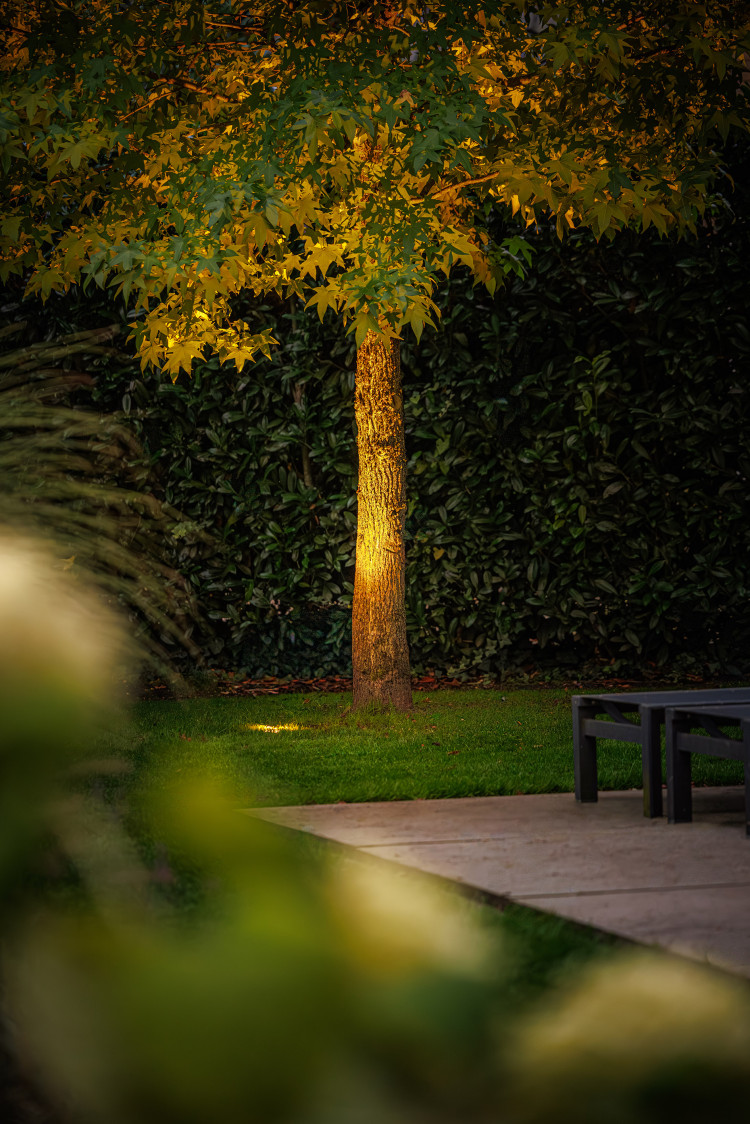
Ground spots are installed in the soil and shine upward. They are ideal for areas where you walk or drive past, such as pathways or terraces. Uplighting from the ground creates a powerful and calm effect, connecting the trunk and canopy.
Spike Spots
If a tree is surrounded by plants or hard to reach from the ground, spike spots are a practical choice. These spots can be aimed precisely and easily repositioned. This makes them suitable for trees that are still growing or whose lighting might need adjustment in the future.
Uplights and Playing with Shadows
With uplighting, the light shines upward from the ground, creating a dramatic effect. When light comes from multiple sides, it adds depth.
Which Beam Angle Suits Which Tree?
A tree’s shape determines which beam angle works best:
- Narrow trees: use a narrow beam
- Wide canopies: use a wider beam
Matching the beam angle to the tree prevents unwanted light spill and keeps the focus on the greenery.
The Surrounding Area
The tree’s location influences your lighting choice. A tree standing freely in the lawn pairs well with ground spots and uplights. If the tree is close to a house or veranda, decklights may work better. For trees surrounded by plants or shrubs, ensure the light fixture stands above the surrounding vegetation.
Warm Light
Warm light is usually the best choice for the garden. This color temperature complements the greenery and creates a calm atmosphere. Leaves gain depth and the trunk appears natural without harsh or cool tones.
Creating a Cohesive Lighting Design
Tree lighting works best when it’s part of a larger whole. Combine tree lighting with pathway lights, border lighting, and post lights to create a cohesive and calm overall look.
The Right Tree Lighting from Lightpro
Curious which lighting suits the tree you want to illuminate? Use our configurator to create a lighting plan or contact us for more information.
Frequently Asked Questions
Which lighting is best suited for illuminating a tree?
Garden spots are most commonly used. Depending on the situation, you choose ground spots or spike spots.
How many spots do I need to illuminate a tree properly?
This depends on the size, shape, and appearance of the tree. Small trees can often be lit with one spot. Large trees typically need two or three placed around the tree.
Should I light a tree from below or from the side?
Most trees are illuminated from below (uplighting) to highlight the trunk and canopy.
What is the best light color for tree lighting?
Warm white light between 2700 and 3000 Kelvin is ideal. It enhances the natural tones of the trunk and leaves and creates a warm atmosphere.
How do you account for a tree’s growth?
Use adjustable spots and avoid placing fixtures too close to the trunk. This way, you can easily readjust the lighting later without redesigning the entire plan.