 Nederlands
 English
 Great Britain
 Deutsch
 Français
 Svenska
- Home
- Inspiration
- Lighting plan
Lighting plan
How to make a good lighting plan for the garden: Tips & Tricks
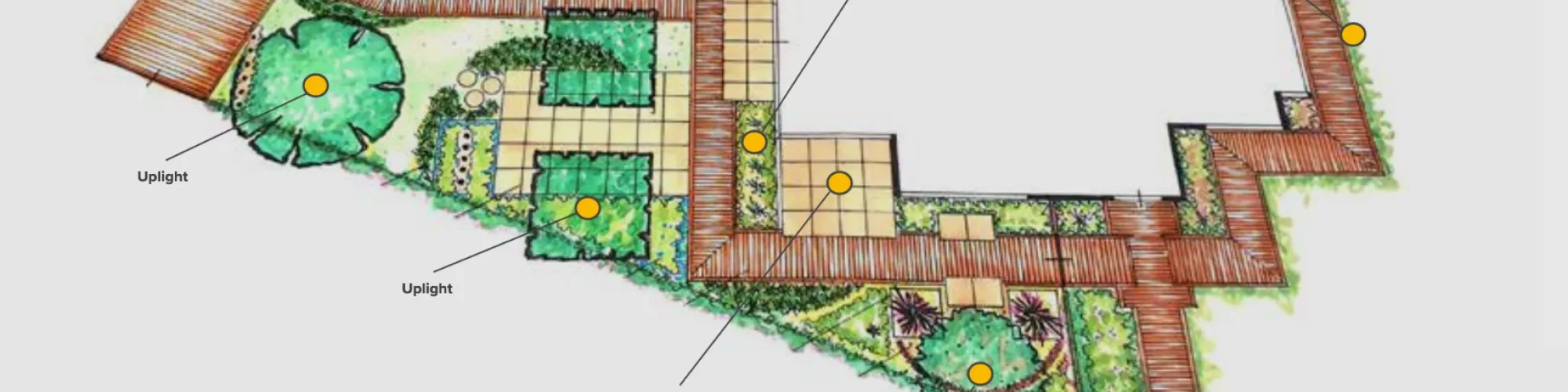
A good lighting plan for your garden can make a world of difference. It not only creates a delightful mood, but also increases the safety and functionality of your outdoor space. Here you’ll see an example of a garden lighting plan, and we will give you some tips and tricks to help you create a perfect lighting plan for your garden.

1. Create a lighting plan for your garden
Start by making a design of your garden. Make a sketch of the layout and note important elements such as paths, terraces, plants and water features. Think about how you use the space and which areas you want to highlight or illuminate at night.
2. Determine lighting functions
Lighting can have different functions, such as:
- Functional lighting: For lighting paths, steps and the entrance to your home.
- Mood lighting: For creating a cozy ambiance on patios and seating areas.
- Accent lighting: To highlight specific elements such as trees, sculptures or ponds.
3. Choose the right lighting fixtures
There are several types of outdoor lighting available, each with its own function:
- Spotlights: Ideal for creating beautiful shadows and defining interesting architectural objects in the garden or to illuminate the walkway.
- Uplights: Gives the outdoor space a high-quality aesthetic appearance. These lights face upwards, attractively illuminating partitions, walls or objects such as trees or bushes.
- Decklights: Can be used in patios or steps for subtle yet effective lighting.
- Wall lights: Perfect for illuminating walls, fences and façades.
- Post lights: Ideal for illuminating walkways and driveways.
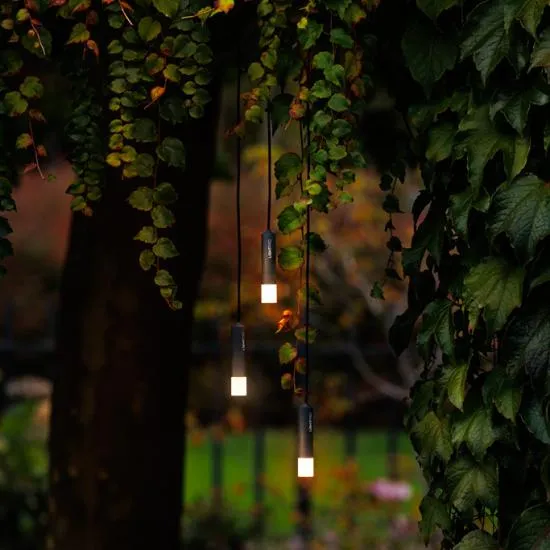
- Decorative lights: Long balmy evenings in the garden become even cozier with the right mood lighting. Even during cooler days, ambient lights ensure a festive mood both indoors and outdoors.
4. Consider light color and intensity
The color and intensity of light play a major role in the mood you want to create. It is therefore a good idea to think about what mood you want in your garden when making a lighting plan. Warm white light (around 2700–3000K) creates a cozy and relaxing mood, while cool white light (4000K and above) is more functional and bright. Dimmer functions can also be useful to adjust the light intensity to improve the quality of life for insects, as well as to accommodate the growth of your plant, tree or shrub.
5. Plan the power supply
There are many benefits to using 12-volt garden lighting:
- No electrician needed.
- The cables don’t need to be buried half a meter underground.
- Easily expandable.
- Easy to install yourself.
Use a socket in the garage, shed or veranda to plug in the transformer. Make sure the transformer is suspended 30 centimeters above the ground. The transformer converts the 230-volt current into 12-volt and from here you can run the cable throughout the garden to then connect the desired fixtures.
6. Think about sustainability
Opt for energy-efficient options such as LED lighting. These have a longer service life and consume less energy than traditional incandescent bulbs. All 12-volt garden lights feature LED lighting.
7. Use timers and sensors
To save energy and increase safety, use timers and motion sensors, such as the Motion Sensor SMART. This ensures that the lights only come on when needed, like at sunset or when someone walks by.
8. Trial and error
Before permanently installing all lighting, it is a good idea to make a trial installation. This helps you see how the light shines and whether it achieves the desired effects. Adjustments are then easily made before everything is permanently installed. The advantage of 12-volt garden lighting is that it is easy to move around!
9. Updates
Don’t throw away your design when you’re done! As plants, shrubs and trees grow or new ones are planted, your garden changes and you’ll be able to easily adjust the sight-lines.
Conclusion to your garden lighting plan
A good lighting plan will transform your garden into a magical and functional space, even after sunset. By considering the lighting functions, choosing the right fixtures and thinking about sustainable options, you can create a beautiful outdoor environment. Remember to experiment and adjust until you find the perfect balance.
Good luck creating a lighting plan for your garden!